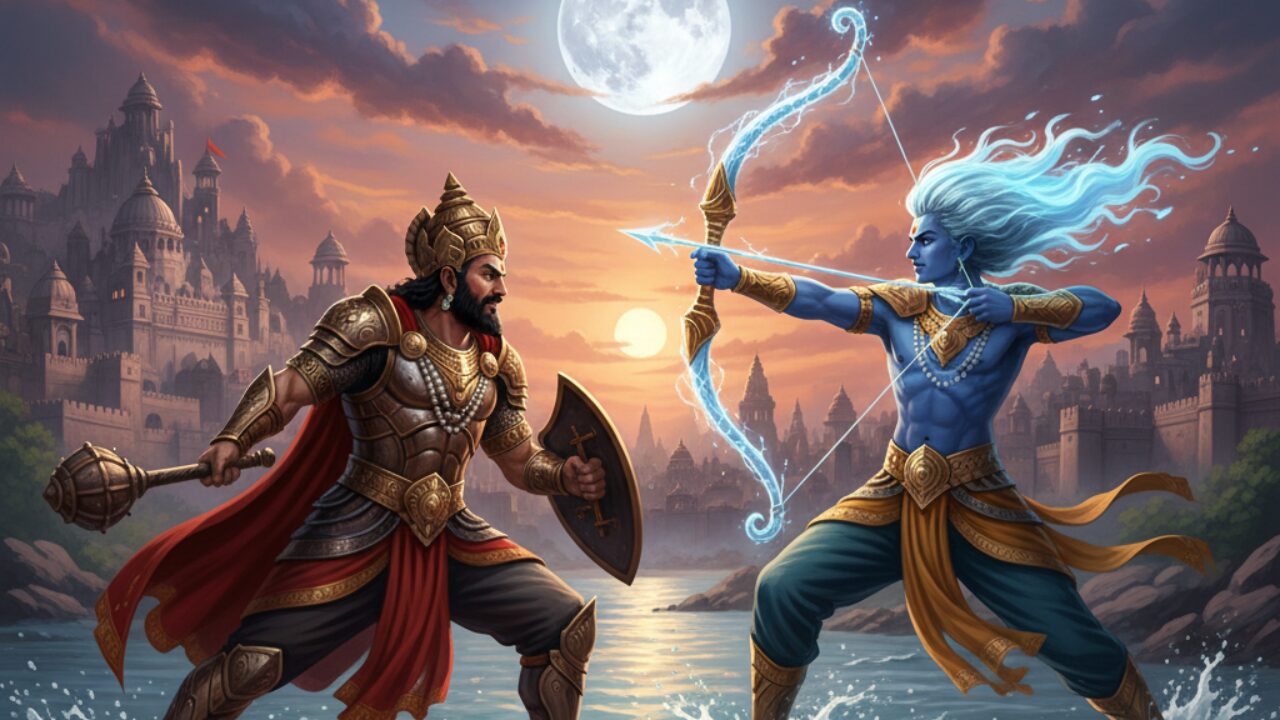
The Forgotten King of Hastinapur: The Tragic Tale of Chitrangada
While the names Dhritarashtra, Pandu, and Vichitravirya are etched into the memories of those who know the Mahabharata, one name often slips through the cracks of time: Chitrangada.
Most people remember Vichitravirya as the heir to Shantanu and Satyavati, but he was actually the second-born. Before him stood a mighty warrior-king who briefly held the destiny of the Kuru dynasty in his hands.
A Crown Won by a Vow
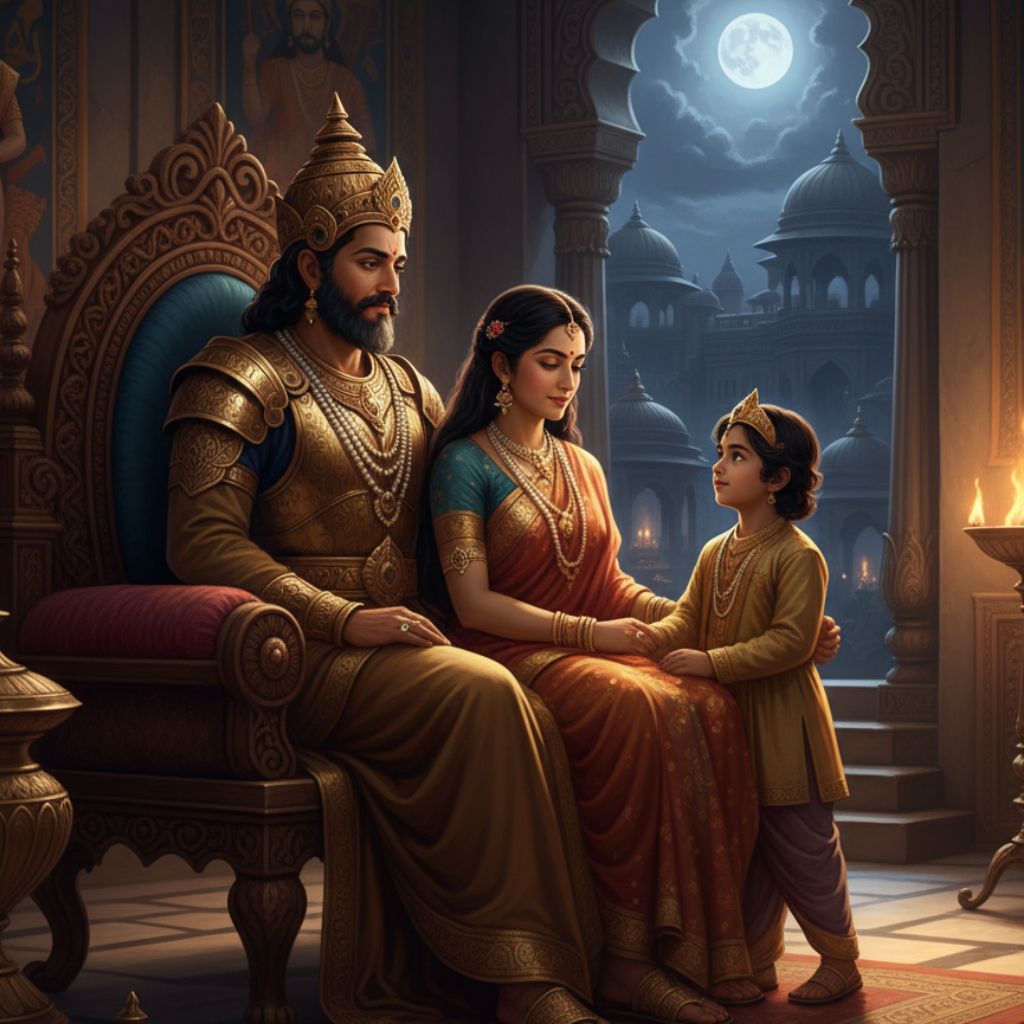
When Bhishma took his legendary oath of celibacy and renounced his claim to the throne, the path was cleared for the children of Queen Satyavati. As the eldest son, Chitrangada ascended the throne of Hastinapur.
He was not a weak king. In fact, he was described as a powerful ruler, well-versed in the arts of war and statecraft. For a time, it seemed the Kuru lineage was secure under his strong leadership.
Note: Do not confuse this King Chitrangada with Princess Chitrangadaa, the warrior-queen of Manipur and one of Arjuna’s wives!
The Battle of the Names
The downfall of this king is one of the strangest and most symbolic stories in the epic. It didn’t start with a land dispute or a stolen bride, but with an identity crisis.
While hunting in the forest, the King encountered a powerful Gandharva (a celestial being). In a twist of fate, the Gandharva was also named Chitrangada. Proud and territorial, the celestial being issued a bizarre ultimatum:
“There cannot be two Chitrangadas on this earth at the same time. Either change your name, or fight me.”
Refusing to surrender his name or his dignity, the King of Hastinapur accepted the challenge.
Three Years on the Riverbank
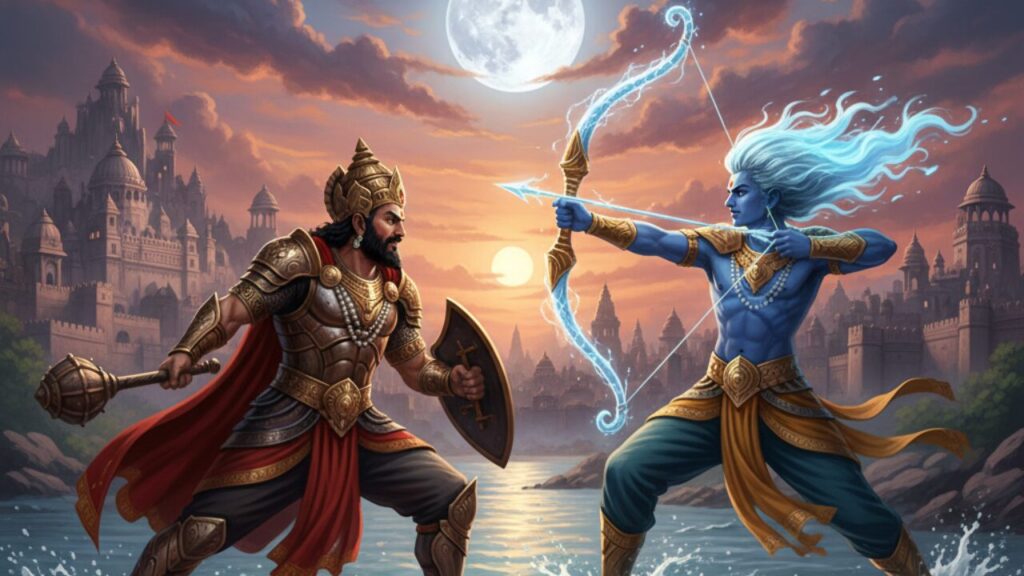
This wasn’t a quick skirmish. The two warriors—one mortal, one celestial—clashed for three grueling years on the banks of the River Saraswati.
The battle was a testament to the King’s prowess; he held a celestial being at a stalemate for a thousand days. However, the Gandharva eventually proved too powerful. King Chitrangada was killed in the duel, leaving the throne vacant and the kingdom in shock.
The Ripple Effect
Because Chitrangada died childless, the crown passed to his younger brother, Vichitravirya. This shift in power set off a chain of events that defined the rest of the epic:
- Vichitravirya’s fragile health: Unlike his brother, Vichitravirya was not a warrior, leading to Bhishma having to intervene to find him wives (Amba, Ambika, and Ambalika).
- The Lineage Crisis: Vichitravirya also died young without heirs, necessitating the involvement of Rishi Vyasa to father the next generation.
If Chitrangada had won that three-year war, he might have ruled for decades and produced heirs of his own. The Great War of Kurukshetra might never have happened, or at the very least, it would have looked entirely different.
What do you think? Was it pride or honor that led Chitrangada to fight for three years over a name?
If you enjoyed this deep dive into the “minor” characters of the epic, would you like me to tell you the story of Vichitravirya’s complicated marriage next?
Read more about Least Known Characters of Mahabharata here